
Welcome
Dear colleague,
We welcome you to EDUNOVATIC 2026, the eleventh edition of the International Virtual Conference on Education, Innovation and ICT. We sincerely thank all the speakers who have joined us in previous editions, contributing to the exchange of interesting projects and research, all of which are available in open access in the EDUNOVATIC Conference Proceedings.
In this new edition, which marks more than a decade of activity, we aim to continue providing an effective virtual platform for the exchange of ideas and experiences among professionals committed to innovative and high-quality education. To enhance scientific standards and ensure the rigor of contributions, all full papers undergo double-blind peer review, and we adhere to the ethical publication standards of COPE (Committee on Publication Ethics).
This conference seeks to generate significant contributions with high academic value in the fields of Education, Innovation, and ICT, reinforcing its international impact and the visibility of authors’ work.
We invite participants to submit up to two original contributions, which can be Full Paper and/or Abstract, depending on the scope and nature of their work.
Full Papers will undergo a double-blind peer review process and will be published in the conference proceedings with individual DOI, ISBN, and ISSN by Adaya Press. The proceedings of the 11th edition will be submitted for evaluation and possible indexing in the Web of Science (WoS) Core Collection, in addition to dissemination through databases such as DIALNET, and will be accessible online for academic consultation.
Abstracts will be published in a separate abstract book with an independent ISBN, accessible online through the EDUNOVATIC website. Abstracts will undergo a light editorial review to ensure proper formatting, clarity, and relevance.
The official language of the conference is English; however, submissions may also be presented in Spanish or Portuguese.
The Proceedings of the 6th (2021) and 9th (2024) editions of the EDUNOVATIC Conference are indexed in the prestigious Web of Science (WoS) Core Collection database, specifically, in the Conference Proceedings Citation Index – Social Science & Humanities (CPCI-SSH), which underscores the scientific quality of the event.
On the website menu, you will find all the relevant information regarding topics, important dates, organization, participation, registration, and submissions.
The Organizing Committee is pleased to invite future authors to send original contributions until October 15, 2026. The conference will be held completely virtual on November 18-19, 2026.
We welcome all future participants and hope this conference will be an excellent opportunity to share and continue learning together.
The Organizing Committee of EDUNOVATIC 2026
Scientific Committee
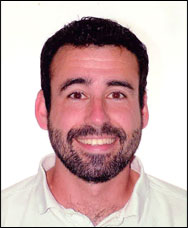
Jordi Mogas Recalde – Universitat Rovira i Virgili, Spain
Jordi Mogas Recalde holds a PhD in Educational Technology, advanced degrees in educational sciences, and a degree in Information and Documentation, while currently studying Computer Engineering. He serves as an Assistant Professor in Pedagogy at the Terres de l’Ebre Campus of Rovira i Virgili University (URV) and collaborates with the Education and ICT graduate programs at the Open University of Catalonia (UOC). Additionally, he is a member of ARGET and technical editorial secretary for UTE Teaching & Technology, focusing his research on smart and virtual learning environments alongside self-regulated learning. https://ikas.cat/jordimogas/
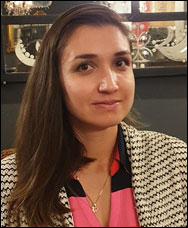
Gali Aleksandra Beltran Zhizhko – Technological University of Durango, Mexico
PhD in Educational Technology from the Mar de Cortés University in Mexico, Master in Engineering and Earth Sciences from the King Abdullah University of Science and Technology in Saudi Arabia and a degree in Earth and Environmental Sciences from the Paul Sabatier University in France. She has been a professor at the Technological University of Durango since September 2019, as a subject professor, and since May 2022 as a full-time professor. She has taught Mechatronics Engineering subjects, bilingual modality, such as Linear Algebra, Mathematical Functions, Differential Calculus, Integral Calculus, Mechanical Systems. Fluent in English, Spanish, Russian and French. She has participated in various conferences in the educational area and published in international journals on topics related with educational technology applied to the teaching of physics and mathematics at the university level, peace education and tutoring for university-level students.
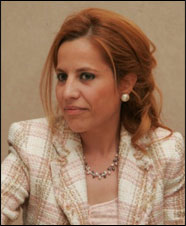
Irene Romera Pintor – University of Valencia, Spain
PhD in Italian Philology from the Complutense University of Madrid, where she also completed dual undergraduate degrees in Italian Philology and French Philology. In 2009, she was appointed “Cavaliere nell’Ordine al Merito della Repubblica Italiana” in recognition of her distinguished contribution to Italian studies abroad. She is currently a Full Professor (Catedrática) of Italian Philology at the University of Valencia and has been awarded four six-year research periods (sexenios de investigación) by the Spanish Ministry. A prominent translator, her work includes Edmundo De Amicis’ España, diario de viaje de un turista escritor (2000) and several works by Vincenzo Consolo. As an editor, she has coordinated numerous monographic volumes and special issues for the journals Critica letteraria (2013), Italique (2015), and Quaderns d’Italià (2021). Together with Susanna Villari, she serves as the Editor-in-Chief of the international online journal Studi giraldiani. Letteratura e teatro (www.studigiraldiani.it). She is also the director of the ‘Arbor inversa. Studi e Testi giraldiani’ book series, published by Aracne Editrice (Rome), for which they co-edited the inaugural volume: Da Ferrara a Firenze: incontri giraldiani. Per Carla Molinari (2018).
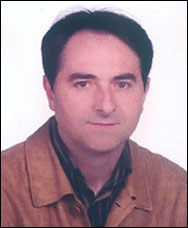
José Daniel Sierra Murillo – University of La Rioja, Spain
Member of the Teaching and Research Staff (PDI) at the University of La Rioja (UR). He holds a Bachelor’s degree and a PhD in Physical Sciences from the University of Zaragoza and is also a Science and Technology Outreach Specialist. Throughout his extensive teaching career, he has led several Teaching Innovation Projects, some of which were funded by the UR, and all of which have been presented at various national and international Educational Innovation conferences, such as EDUNOVATIC. His current research focus is on the “Theoretical Investigation of Gas-Phase Chemical Reactions” as a basis for potential Chemical Lasers. Scientific communication is another of his passions, which he pursues through workshops, conferences, and publications on high-interest topics in today’s society.

Miriam Rodríguez Pallares – Complutense University of Madrid, Spain
Miriam Rodríguez Pallares. PhD in Journalism (UCM), Master in Journalism and Scientific Dissemination (UCM) and Degree in Library Science and Documentation (USAL). Currently, she works as a professor in the Department of Journalism and Global Communication (Faculty of Information Sciences) at the Complutense University of Madrid. Media Business is her main field of study and his area of specialization focuses on the analysis of media content management, with special attention to radio content. She is accredited as a Senior Lecturer by ANECA and she has a six-year research period.
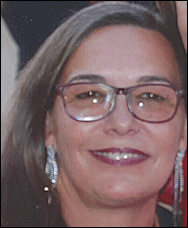
Myriam Rodríguez Pasquín – University of Murcia, Spain
Full-time Professor in the Department of Applied Economics at the University of Murcia and a member of the teaching innovation group “EcoNoEco” (Applied Economics in Non-Economic Degrees) at said university, has obtained the rating of Excellent in the evaluation of his teaching activity (DocentiUM). Her research is carried out, on the one hand, in the field of educational innovation and, on the other, in the digital economy. In the first, their works have been oriented towards the importance of active methodologies and ICT in university teaching: Teaching Materials for Active Methodologies in University Education, Journal of Higher Education Theory and Practice (DOI: 10.33423/jhetp.v23i8.6066); Evaluación de la combinación de clase invertida y uso de aplicaciones para promover una docencia universitaria interactiva, Educar (DOI: 10.5565/rev/educar.1740). In the second, special attention is paid to territorial and gender inequalities, as well as the role that digital skills play in explaining these differences: Digital Gender Divide and Convergence in the European Union Countries, Economics (DOI: 10.1515/econ-2021-0012); Digitalization and skills in Spain: regional differences and gender gaps, Sociología y Tecnociencia (DOI: 10.24197/st.2.2023.94-117).
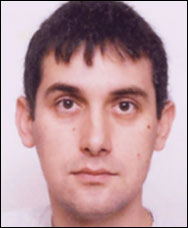
Igor Dobrača– Juraj Dobrila University in Pula, Croatia
Master’s degree in Economics, Informatics, and Information Sciences – Library Science, and a postgraduate specialisation in Translation studies. PhD candidate in Information Sciences and Pedagogy. He is presently engaged as an IT teacher in primary school and also acts as an external associate in the position of nominal senior lecturer at Juraj Dobrila University in Pula, Croatia. He participates in projects of translation and localization of educational computer software and professional IT literature for use in teaching. His research is mainly focused on information sciences, education and marketing. He received the state award last year for being one of the most successful educational professionals in the Republic of Croatia in the previous two years.
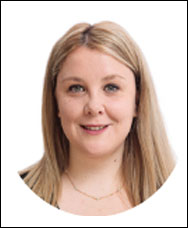
Laura Torres Collado – Miguel Hernández University of Elche, Spain
Assistant Professor at the Miguel Hernández University (UMH), San Juan de Alicante. Postdoctoral Researcher in the Nutritional Epidemiology Group (EPINUT) at the Biomedical Research Networking Center in Epidemiology and Public Health (CIBER-esp) and the Health and Biomedical Research Institute of Alicante (ISABIAL). She holds a PhD in Public Health, a Master’s degree in Public Health, and a Bachelor’s degree in Nursing. Her research line focuses on the relationship between diet and disease across different populations and age groups. She has authored several scientific publications in JCR-indexed journals (Scopus H-index = 22). Currently, she teaches at UMH in the undergraduate programs of Medicine, Occupational Therapy, Nursing, and Pediatry, as well as in the Master’s in Occupational Therapy in Neurology, the Master’s in Public Health, and university extension courses such as “How to complete a Final Year Project (TFG) and survive the process.”
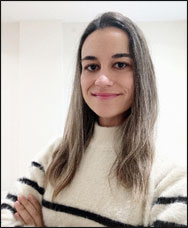
Laura María Compañ Gabucio – Miguel Hernández University of Elche, Spain
Assistant Professor at the Miguel Hernández University (UMH), San Juan de Alicante. Postdoctoral Researcher in the Nutritional Epidemiology Group (EPINUT) at the Biomedical Research Networking Center in Epidemiology and Public Health (CIBER-esp) and the Health and Biomedical Research Institute of Alicante (ISABIAL). She holds a PhD in Public Health, a Master’s degree in Public Health, a Master’s degree in Occupational Therapy in Neurology, and a Bachelor’s degree in Occupational Therapy. Her research line focuses on the relationship between diet and disease across different populations and age groups. She has authored several scientific publications in JCR-indexed journals (Scopus H-index = 16). Currently, she teaches at UMH in the undergraduate programs of Occupational Therapy and Podiatry, as well as in the Master’s in Occupational Therapy in Neurology, the Master’s in Public Health, and university extension courses such as “How to complete a Final Year Project (TFG) and survive the process.”
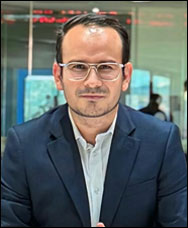
Óscar Cortés Chala – Universidad Surcolombiana, Colombia
Economist and a certified public accountant, with postgraduate training in financial and tax management, financial management, and applied statistics, and is currently a PhD candidate in Economics and Finance. He holds international certification as a capital markets expert and has a solid track record in advanced financial analysis, applied econometrics, investment project evaluation, risk management, and the analysis of financial instruments and derivatives. He possesses extensive academic experience as a university professor at both undergraduate and postgraduate levels in renowned Colombian institutions, teaching subjects in corporate finance, international finance, economic analysis, inferential statistics, and capital markets. His professional practice is complemented by executive experience in the business sector, where he has led financial planning, cost optimization, financial structuring, and strategic decision-making processes. He has actively participated in the international academic community as a speaker at international conferences on finance, accounting, and economic development in Latin America, with research interests in financial literacy, sustainable finance, financial inclusion, and economic development. His profile integrates technical rigor, applied experience, and a commitment to high-level research and academic training.
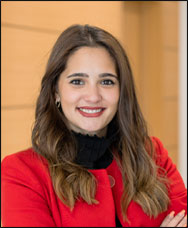
Judit Ruiz Lázaro – National Distance Education University, Spain
PhD in Education from the Complutense University of Madrid (2021) with “International Doctorate” mention, graduating Summa Cum Laude (“Sobresaliente Cum Laude”) and receiving the “Extraordinary Doctorate Award.” She is accredited as an Associate Professor (Profesora Titular de Universidad) by ANECA (2024) and holds one active six-year research period (sexenio de investigación). Currently, she serves as the Vice-Dean of Innovation and Research at the National Distance Education University (UNED, Department of Didactics, School Organization, and Special Didactics). Her recent studies and publications focus on (a) university entrance examinations, (b) the measurement and evaluation of academic performance and its associated factors, as well as (c) educational innovation and innovative learning spaces, and (d) the use of technology and artificial intelligence in education. She is a member of the following consolidated research groups: Professional Development, Vocational Training and Educational Innovation and Interculturality and Media Design (ForInterMed) at UNED, and Measurement and Evaluation of Educational Systems (MESE) at UCM.
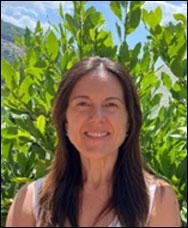
Carolina Vargas Fernández – Rey Juan Carlos University in Madrid, Spain
She carries out teaching activities in the Department of Chemical and Environmental Technology at the School of Experimental Sciences and Technology, at Rey Juan Carlos University in Madrid, Spain, where she is currently a Full Reader. She has teaching experience in various subjects across degree programs such as Chemical Engineering, Environmental Engineering, Energy Engineering, Materials Engineering, Experimental Sciences, and Biology. She applies active methodologies, competency-based assessment, and educational technologies, participating in several Teaching Innovation granted projects. She also serves as a university tutor for final-year students in company internships at Rey Juan Carlos University. She has been awarded four recognized five-year teaching terms and six Docentia program evaluations.

Julia Pereira de Lucena – Entropía Educativa Research Center, Colombia
Master’s degree in Educational Technology (University of Buenos Aires, UBA). She is a Specialist in Educational Technology (UBA), a Specialist in eLearning Environments (Organization of Ibero-American States), holds a Bachelor’s degree in Educational Sciences (UBA), and is a Certified Kindergarten Teacher (Escuela Normal Superior No. 4). She has been working in e-learning for more than 15 years. She is a researcher and editor at the Entropía Educativa Research Center (Colombia). She served as an educational project advisor at the e-Learning Center of the National Technological University (UTN, Buenos Aires Regional Faculty). She was Head of the eLearning Department at the Universidad de Ciencias Empresariales y Sociales for eight years. She worked as a kindergarten teacher for ten years and conducts research on teaching practices with technology in early childhood education. She has published articles in journals and books focused on education in general and Educational Technology in particular, including publications by Orbis (Venezuela), the University of Salamanca (Spain), the Catholic University of Córdoba (Argentina), the Polytechnic University of Valencia (Spain), and the National University of Quilmes (Argentina). She serves as a peer reviewer and as a member of academic and scientific committees for numerous international events, including congresses, conferences, symposia, and academic meetings. She was the organizer of the first TEDx event held at a private argentine university, TEDxUCES, for three consecutive years.
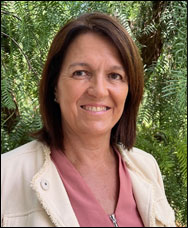
Teresa Torres Coronas – Rovira i Virgili University, Spain
PhD in Business Administration and Management, with an extensive career in educational innovation, e-learning, and research on the application of ICT in the education sector. She was awarded the First Management Research Prize by EADA (2000). She has solid experience in the design, planning, and development of virtual training courses and educational multimedia resources. She has led and participated in numerous European ERASMUS+ projects, including Sales Management and Relationships for Trade, Adult Education for Sustainability: Competences as Developmental Task, Inclusive Communities at Work, Fostering Digital and Green Transformation in SMEs, and DiSuDeSME – Digitalisation for Sustainable Development of SMEs. Her work has been widely recognized by the Generalitat de Catalunya. In 2016, she received the Jaume Vicens Vives Award for a URV project focused on the analysis, design, and technology-based learning processes for the development of transversal and professional competencies, as well as the URV Social Council Award for innovative teaching techniques. In 2020, she was once again honored with the Jaume Vicens Vives Award for the INSERLAB project, aimed at improving the employability of students with intellectual disabilities.
Organizing Committee
Dr. Thomas Jansen
Dr. Ana Claudia Martins
D. Pedro José Martínez
Ms. Natalia Gutiérrez
Technical Secretariat
Ms. Lourdes Álvarez